Open Science: The Unified Behavior Model—an elemental, unified, and falsifiable framework (and, allegedly, the first of its kind).
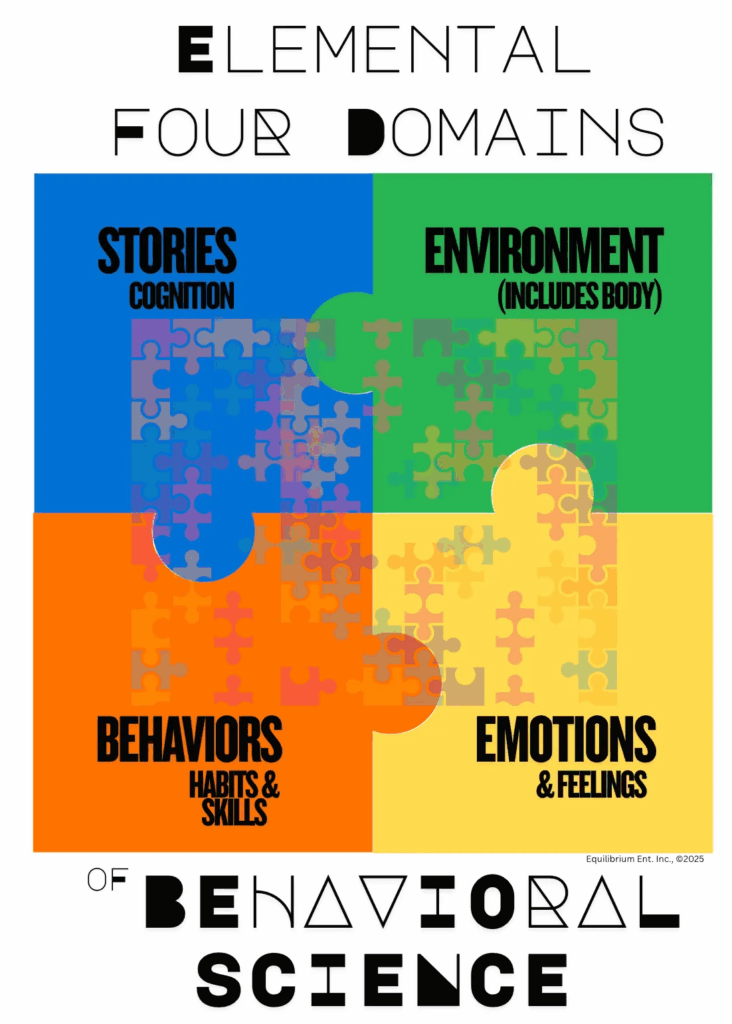
If you think this doesn’t apply to you, you may be out of your mind. (Pun intended.) 👇
How many times have you heard advice on social media, read a book, or listened to a behavioral science expert—maybe a therapist, doctor, or clinician—completely contradict another?
About twelve years ago, I was between appointments when I heard a behavioral scientist give an interview I’ll never forget.
The podcast host said, “I’m confused, doctor. Can you help me understand the difference between habits and skills? They seem pretty similar.”
She paused, searching for the words—trying hard to explain the difference—then finally gave in with a half-laugh: “Well… they can really be very similar.”
Her attempt to explain the difference was telling. The truth is, both are learned—or can be shaped—behaviors that develop over time.
We know habits can form unintentionally (usually the bad ones). That’s why I love this saying:
“Good habits happen when planned; bad habits happen on their own.”
The beauty is that, just like skills, good habits can be intentionally shaped, formed, and strengthened through consistent 28-day P.A.R.R. cycles.
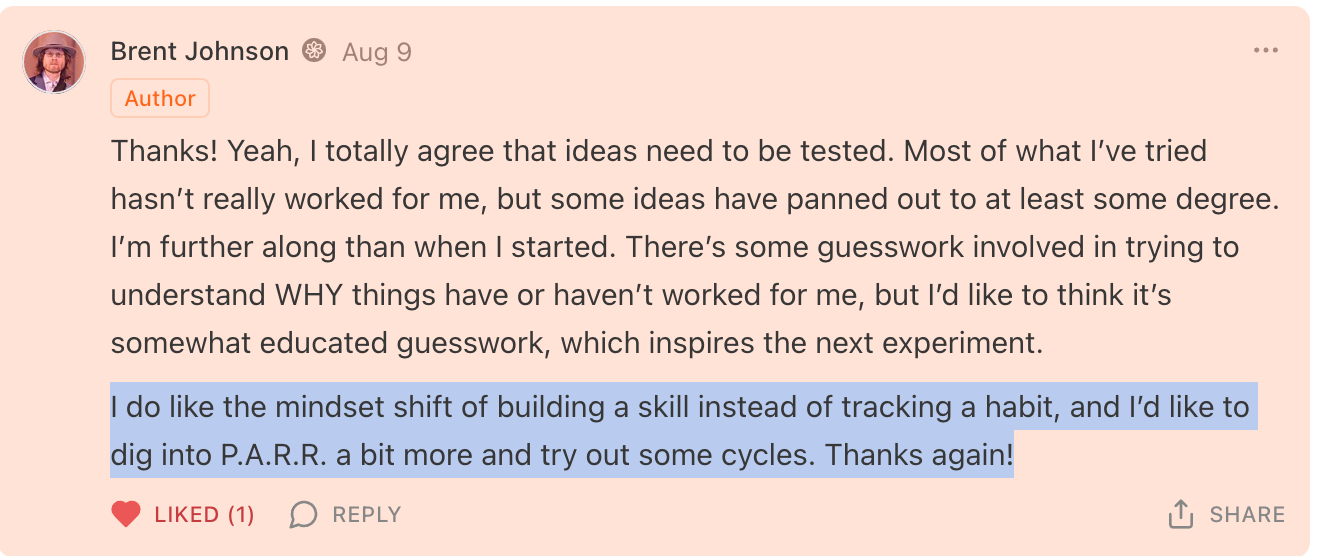
Then consider a separate interview with a prominent habit author. The host, visibly confused, was trying to get clarity between systems and habits.
The author, “Often we’re ambitious… set lofty goals… and we wonder why it doesn’t work out. It’s because we don’t have a system behind it— we don’t have the habits behind the goal.”
Habits behind the goal?
Have you heard that somewhere before?
Which is it?
Is it a system? Or, is it a habit? Confusing, isn’t it?
Are you not confused?
To be clear, systems are not habits.
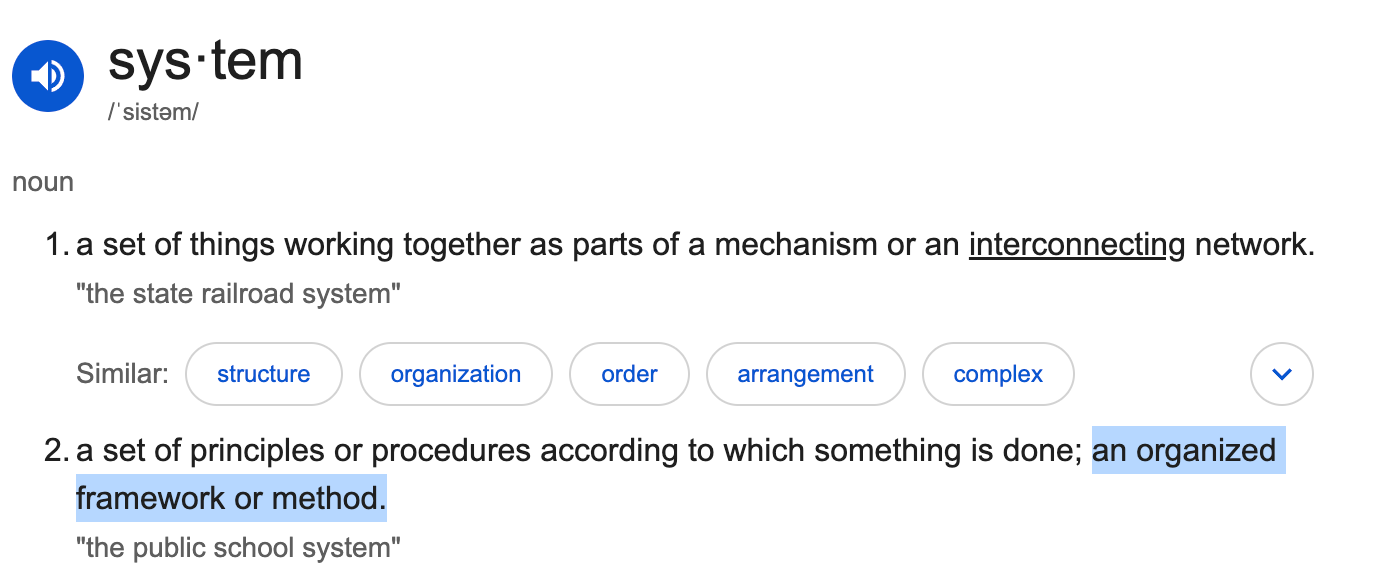
All this to say: IF there were a shared understanding—a common logic and paradigm—the incoherence and confusion that top behavioral scientists have warned about for more than a century could, comparatively speaking, vanish almost overnight.
Sidenote: Consider the world’s most aligned organizations. Their secret isn’t discipline—it’s a system engineered to produce specific, successful behaviors. This is the precise science we apply in our Organizational Behavior Alignment™ (OBA) program.
DARE TO DREAM.
This is the power of a shared paradigm—a common model that is both foundational and universally accessible, with the certainty of 2 + 2 = 4.
If it can resolve expert confusion, what could it do for the turbulence of adolescence?
How serious is this BS problem, really?
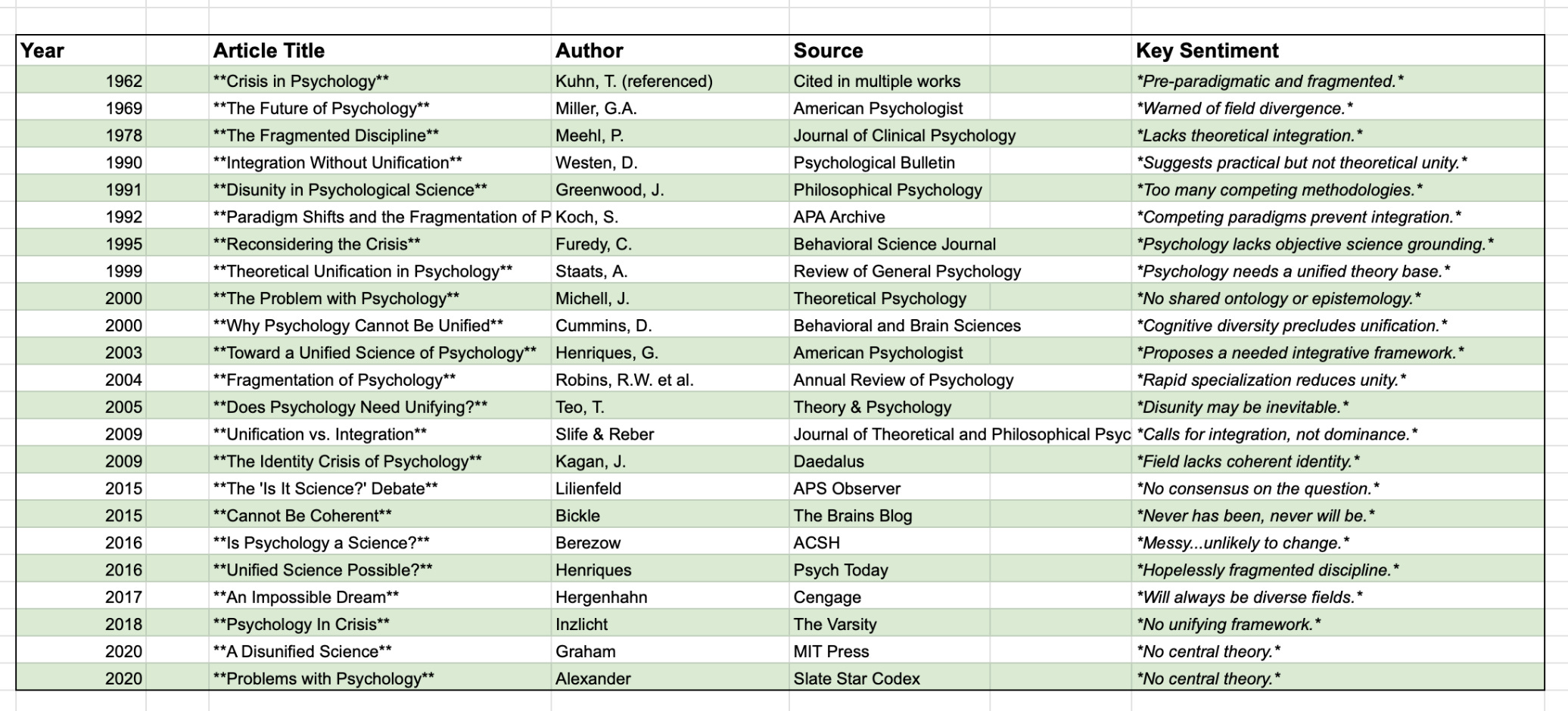
“Crisis!” “Pre-paradigmatic!” “Lacking coherent identity!” ☝️☝️☝️
With no shared paradigm or model, experts have long lamented the field’s inherent incoherence.
This very immaturity—the hope of one day becoming a true science—has left experts and non-experts alike in the same predicament:
Confused. Facing competing therapies.
Baffled by contradictory models. Stuck in endless debate.
Mirage theories that can’t be falsified. And a flood of pop-culture self-help.
In short, no shared basis, no shared paradigm for the elemental language and components of behavior.
The story doesn’t end there. It got so bad… it appears they finally gave up.
Enter: Institutional Amnesia. 👇🏼
Your Move
Can you find a fifth basic element of behavior—something truly irreducible or not emergent?
Be the first to find it and you’ll win an easy $1,000.
If you can’t, share this with someone who loves testing ideas, challenging models, and putting theories to the test.
Invite them to try to break UBM.
Because Grandma was not wrong: start with the corners, and everything falls into place more quickly—and the entire picture becomes clear.
Who’s up for After more than a century of pursuit, behavioral science’s unified, elemental, and falsifiable model appears to have emerged—served on a silver platter.
The burden of disproof now rests with the scientific community—the very community that has sought unification for over a hundred years.
Please—test it. Break it. Improve it.
All truth passes through three stages:
First, it is ridiculed; second, it is violently opposed; and third, it is accepted as self-evident.
Dramatic, I know. 😉
📄 Grab the free habit tracking template: thehabitfactor.com/templates
Go ahead, get a little crazy! What’s confusing about behavioral science or psychology? Share a thought!
Just click the email—it’ll open right on Substack, where you can like, comment, or join the discussion. I read them all and truly appreciate it! 🙏
(Looking at you, top psych departments—according to U.S. News & World Report, 2025): @StanfordPsych, @HarvardPsych, @UCBPsychology, @UCLPALS, @Psych_at_Yale, @UMichPsych, @UCLA_Psych, @UCSDPsych, @OxfordPsych, @PrincetonPsych.
Please, with all due respect, step right up. 👊 🤙 🙏
🚨 BREAKING! Major breakthrough in habit tracking-skeptics, at long last, put to rest. Full details in Section 7.0 of the Unified Behavior Model™ white paper: https://zenodo.org/records/17209721
Habits 2 Goals Premium by Martin Grunburg is a reader-supported publication. To receive new posts and support my work, consider becoming a free or paid subscriber.
The trilogy that uncovered the Unified Behavior Model…
- The Habit Factor®: Habit alignment, momentum, and daily wins!
- The Pressure Paradox™: Productivity, Performance & Peace of Mind.
- EVERYTHING: The stories you tell yourself heavily influence only ‘everything.’
Learn more about The Behavioral Literacy Project & Unified Behavior Model: An Elemental, Falsifiable Framework for Behavior Change
Get the white paper here at Zenodo.org: https://zenodo.org/records/17209721 the challenge?