
On July 8th, in what can only be described as an act of reckless clarity, we published a white paper (grab it here—>) Unified Behavioral Model™ — Read more… listen now.
Disclaimer: The following is a bit tongue-in-cheek. Just a bit.
I have the utmost respect for the behavioral science community and its vast contributions—including the many scientists whose work has directly shaped my own.
That said, the more I learn about the history of attempts to unify behavioral science (and, by association, psychology)—and then set those challenges alongside the Unified Behavior Model (UBM) as it now exists—formally published (elemental and falsifiable), 500+ downloads later—the more peculiar the entire situation becomes.
To be clear: it’s only in hindsight that these “obvious” errors and omissions—both in behavioral science (BS) and in its unification efforts—come into focus.
Tip #1: Make Sure Only True Insiders Get to Play
Whatever you do, don’t approach this unification challenge from the outside. That’s where troublemakers and fresh ideas tend to arise—reportedly. 👇
OUTSIDERS. OUTSIDERS. OUTSIDERS. ☝️ ☝️ ☝️
Better yet, throw up your hands and surrender:
“Why Psychology Isn’t Unified, and Probably Never Will Be…”
“PROBABLY NEVER WILL BE.”
Valid points to be sure…
“Why a Unified Theory of Psychology is Impossible”
Unification as a Goal for Psychology
It goes on and on—for several reasons, dear friends, which appear below.

Tip #2 Prioritize Knowledge over Imagination
Ensure that only those fluent in four-letter acronyms, armed with multiple advanced degrees, and a dense theoretical vernacular are entrusted with presenting “novel” ideas.
Further, insist that only those who can quote James, Pavlov, Watson, Bandura, Maslow, Skinner, and Freud backward and forward—and who possess psychological libraries spanning generations—be invited to contribute.
“Imagination is more important than knowledge.” ~Einstein
Tip #3: Form a Large Committee. The Larger, the Better
Nothing unifies quite like 23—or maybe 43—strong personalities in one room.
When “top behavioral theorists” gather for a week-long consortium, be sure to take minutes, roll in the whiteboard, and order extra coffee.
Everyone knows: the more expert opinions, the quicker a consensus.
As history (and a few hallucinating AIs) like to remind us, when it comes to unification attempts, the go-to answers are always consortia, committees, and bowling alleys.
Darwin famously huddled with his nine-person advisory council.
Einstein wouldn’t dream of publishing without first posting to social media.
And Newton? Legendary for his gravitational consortiums.
Here’s a nutty thought: what if that unified model came from one person on the fringe? (The fringe—see above ☝️.)
One person. U N I — F I C A T I O N.
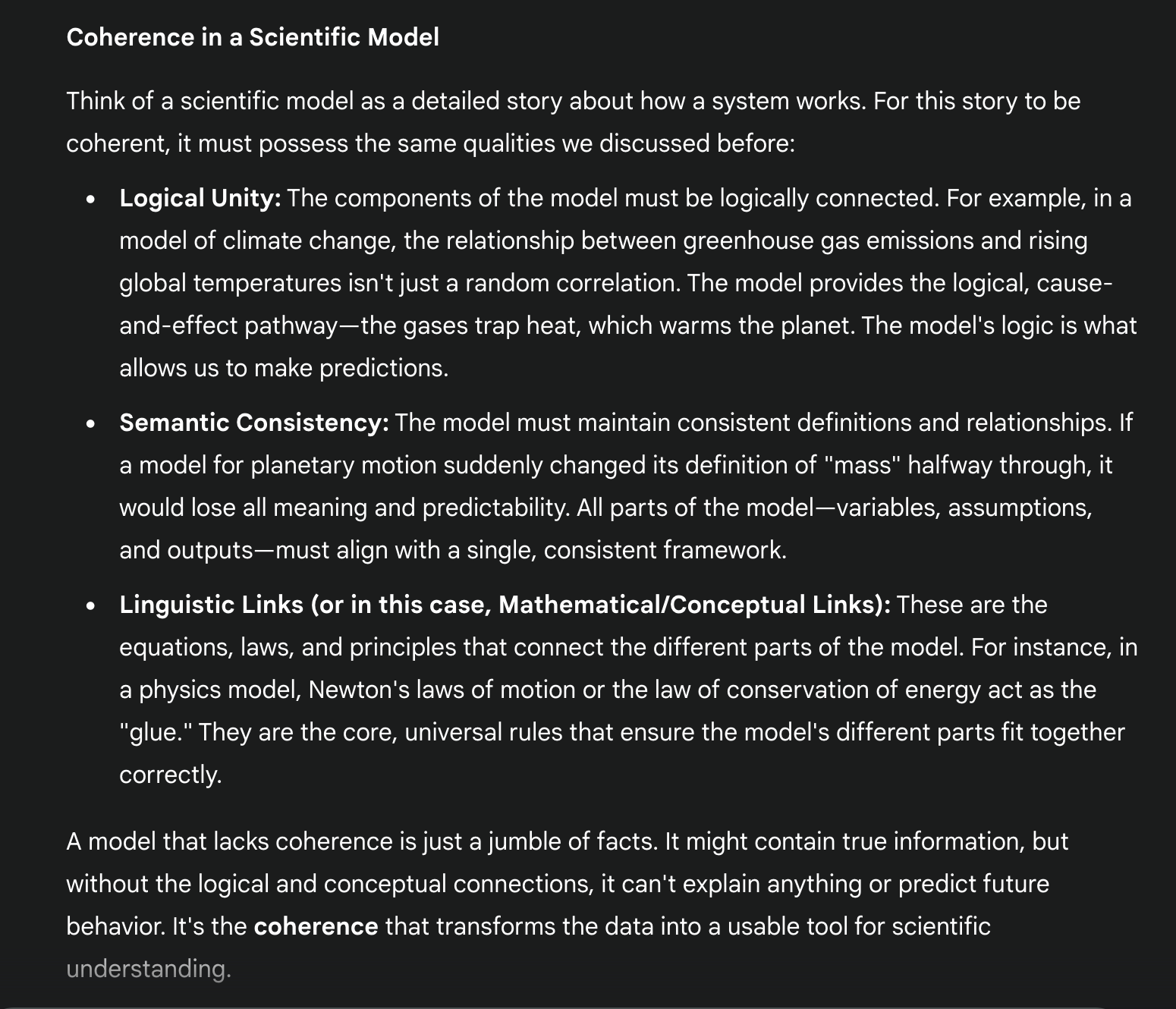
⚠️ WARNING: Unification carries a dangerous synonym—coherence.
By extension, it implies that the 150-year exercise known as behavioral science—and its twin sister, psychology—are, brace yourself…
INCOHERENT.
Oy.
To be clear, that’s not me talking, it’s Webster.
If you didn’t catch the 1991 reference—well, that was when the U.S. National Institute of Mental Health (NIMH) convened a “Top Behavioral Consortium.”
Its noble goal?
To create a “Unified Framework.”
“What emerged?” you ask.
The meeting —a week long gathering—brought together “leading human behavior theorists”. While a comprehensive roster of all attendees from this specific 1991 meeting is not fully detailed in the available documentation, a critical outcome of this expert gathering was the acknowledgment that
“there was no consensus among the theorists”
on a single, universally accepted unified framework.
Imagine that.
Tip #4: Whatever You Do, Don’t Articulate the Core Problem Statement
There appear to be no public meeting minutes from the week-long NIMH gathering of “top theorists”—at least none we can reference.
No specifics on the budget for convening such a summit.
No documentation outlining the precise problem statement behind the search for “a single, universally accepted unified framework.”
And certainly related: how is this not the fundamental problem statement for a field called behavioral science—especially one aiming to unify?
Fundamentally, what are the elemental drivers of BEHAVIOR — the core influences that shape its emergence in the moment and its development over time?
If that’s not the core problem statement… then what is?
What problem could be more fundamental—behaviorally speaking—to the field of behavioral science?
Final thought: Now this—identifying the core challenges facing behavioral science—is the perfect reason to form a committee. Not to solve the grand issues plaguing BS and psychology, but to articulate them clearly, and open them up to the vast ocean of researchers and academics. (See UBM Abstract FIRST SENTENCE below…)
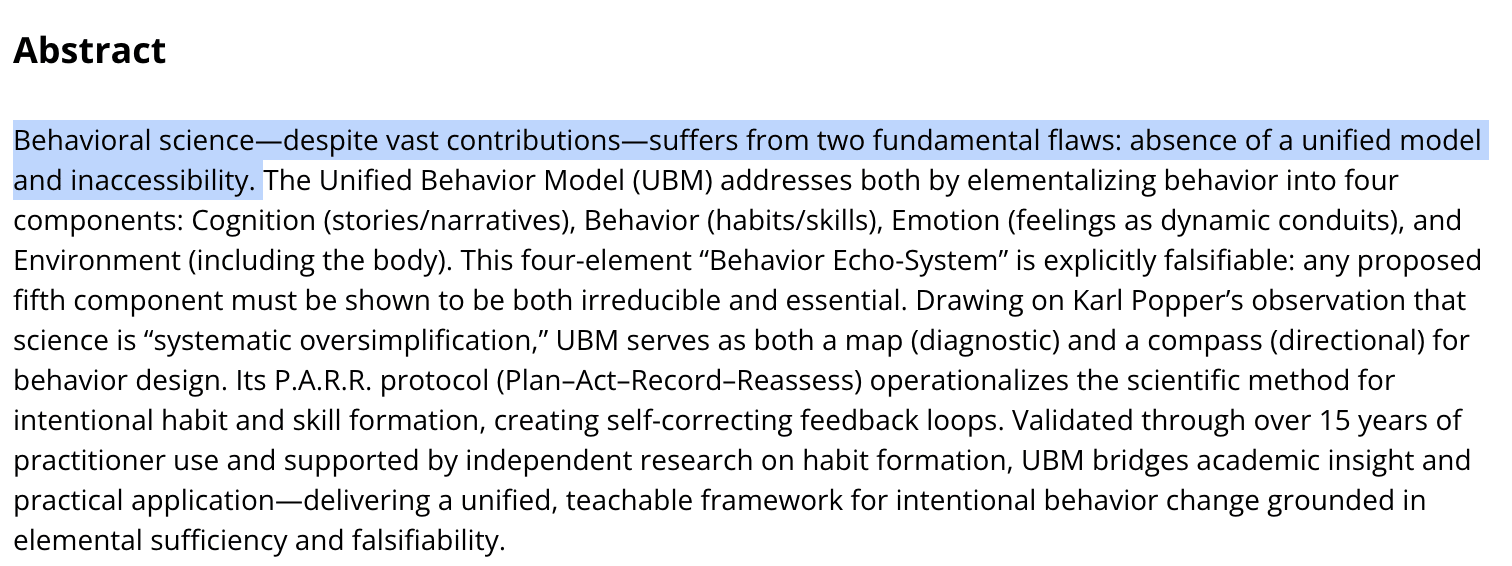
Tip #5: Keep It Complex (Ideally, Incomprehensible)
ONE. MORE. TIME.
Dr. Karl Popper, the famed philosopher-scientist, often described:
Science as the art of systematic oversimplification.
Naturally, academia should aim for the opposite.
Construct diagrams that look like they’ve had a nervous breakdown.
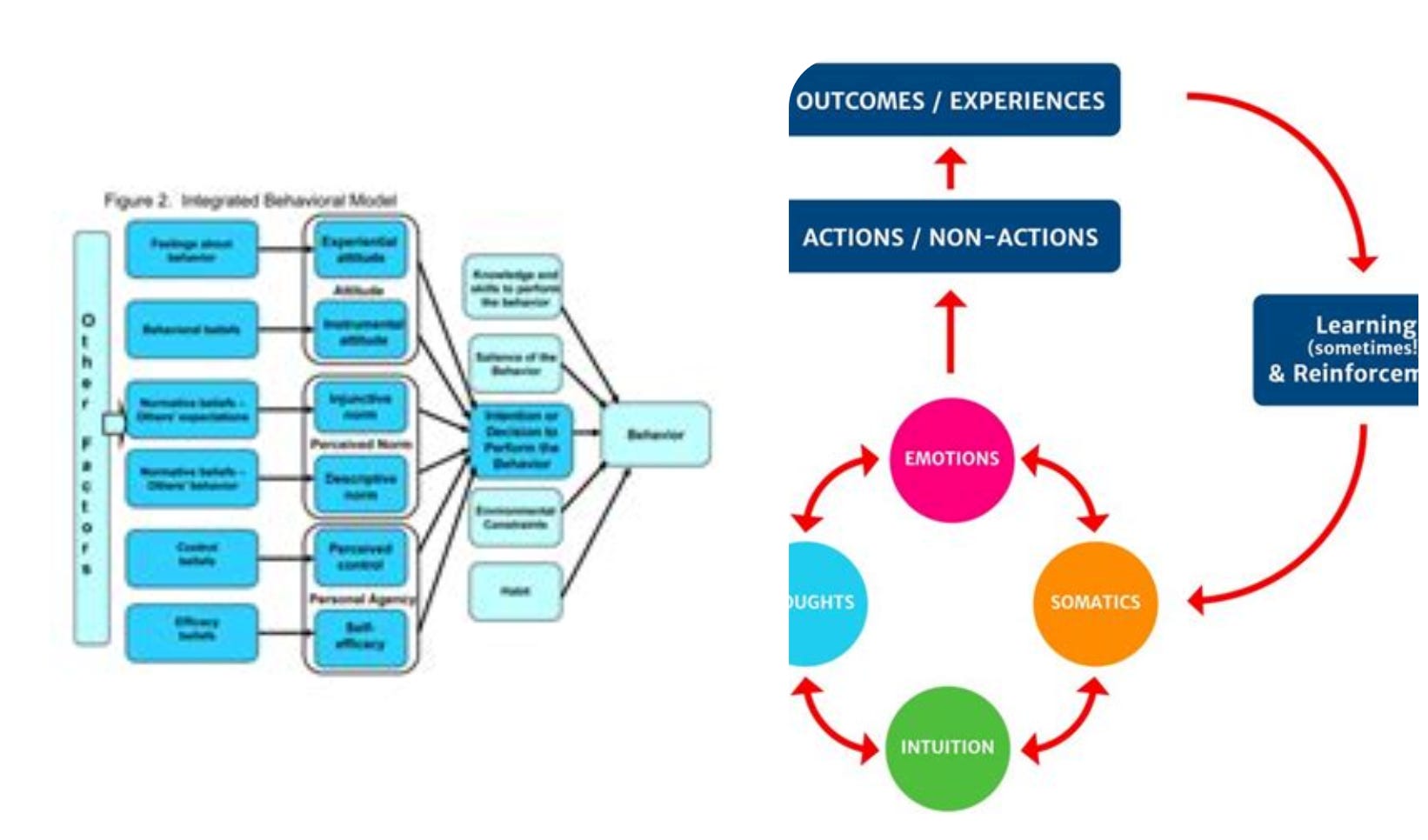
Add arrows in every direction.
Require a legend, a supersonic decoder ring—maybe even a small prayer book.
If grad students aren’t weeping softly in the library, it’s not ready.
Tip #6: Avoid the Elemental
Elemental means you’ve boiled things down to their ESSENCE.
F I R S T P R I N C I P L E S
I know, I know—where’s the fun in that?
Better to roll out 19 “core principles” that conveniently rhyme—or, better yet, forge a very long acronym. E.L.E.P.H.A.N.T., perhaps?
Extra credit if the term nods to a furry sea creature.
Keep every concept pleasantly vague, and gently smother it all with layers of nuance.
Tip #7: Ensure It Is Not Testable
Back to our scientific hero, Karl Popper—the man who gave us what’s now considered the gold standard of science. FALSIFIABILITY. (See: The Logic of Scientific Discovery.)
In short: if a theory can’t be tested and disproved—especially a unified theory, for heaven’s sake—it ain’t science, Chuck!
So naturally, let’s keep our models logical-sounding, untestable, and elaborate just enough to send a few statisticians running.
Better still if it’s lyrical, metaphorical, and open to interpretive dance.
And don’t worry—if someone asks whether it’s falsifiable, smile, pause, and launch into a soulful, complicated story about your children… and how falsifiability is so often misunderstood.
Tip #8: Always Start with Theory. Practice Is Overrated.
Practice before theory? That makes far too much sense.
Oh, wait—someone’s already tried that.
Both P.A.R.R.—The Habit Factor’s method for habit development and increasing automaticity and habit strength (which mirrors the scientific method and carries 15+ years of empirical evidence)—and the Behavior Echo-System (BES)—two components of the Unified Behavior Model (UBM)—have been in practice and taught for years.
“Well,” you say, “teaching something doesn’t make it science.”
Correct. Which is exactly why we took the time to articulate these methods and their methodologies in a scientific paper—and backed them with a falsifiability statement.
The Behavior Echo-System is taught as a best practice for both personal transformation and goal achievement. (Parenthetically, LLMs suggest UBM-BES boosts goal-probabilistic outcomes by about 30%.)
Shhhhh. 🤫
So yes, by all means: let’s prioritize theory. Form committees, convene consortia, and spin out elaborate frameworks for a unified framework—long before anyone ever applies or teaches it.
We’ll be right over here if you need us.
Tip #9: Keep Behavioral Science (BS) Inaccessible to the Public
After all, if a seventh grader could understand and apply a Unified Behavior Model in the classroom—well, where would that leave all the complications?
What’s the use of democratizing behavioral science so adolescents can shape their future character, habits, and skills?
Sounds like a wildly undesirable outcome, doesn’t it?
You’re right. It’s far better to keep core behavioral science (BS) safely incomprehensible—siloed in labs, buried in journals, preserved in lecture halls, and locked away in therapists’ offices.
The last thing we want is to start teaching the ABCs and 123s of behavioral science to adolescents.
Imagine teenagers applying elemental behavioral science—the Unified Behavior Model—to clearly understand how to move toward their goals and ideals, not by guessing, but with a science-backed model.
Total chaos.
As noted above—a bit tongue-in-cheek.
Stay classy, San Diego—Stay classy, BS. ☝️
And pls, keep on trackin’ ✅
~mg
All truth passes through three stages:
First, it is ridiculed; second, it is violently opposed; and third, it is accepted as self-evident.
Dramatic, I know. 😉
📄 Grab the free habit tracking template: thehabitfactor.com/templates
The Trilogy: WARNING! Do NOT read these books
- The Habit Factor®: Habit alignment, momentum and daily wins!
- The Pressure Paradox™: Productivity, Performance & Peace of Mind.
- EVERYTHING: The stories you tell yourself heavily influence only ‘everything.’
Science may be described as the art of systematic oversimplification. ― Karl Popper
Voila: UBM. 👇
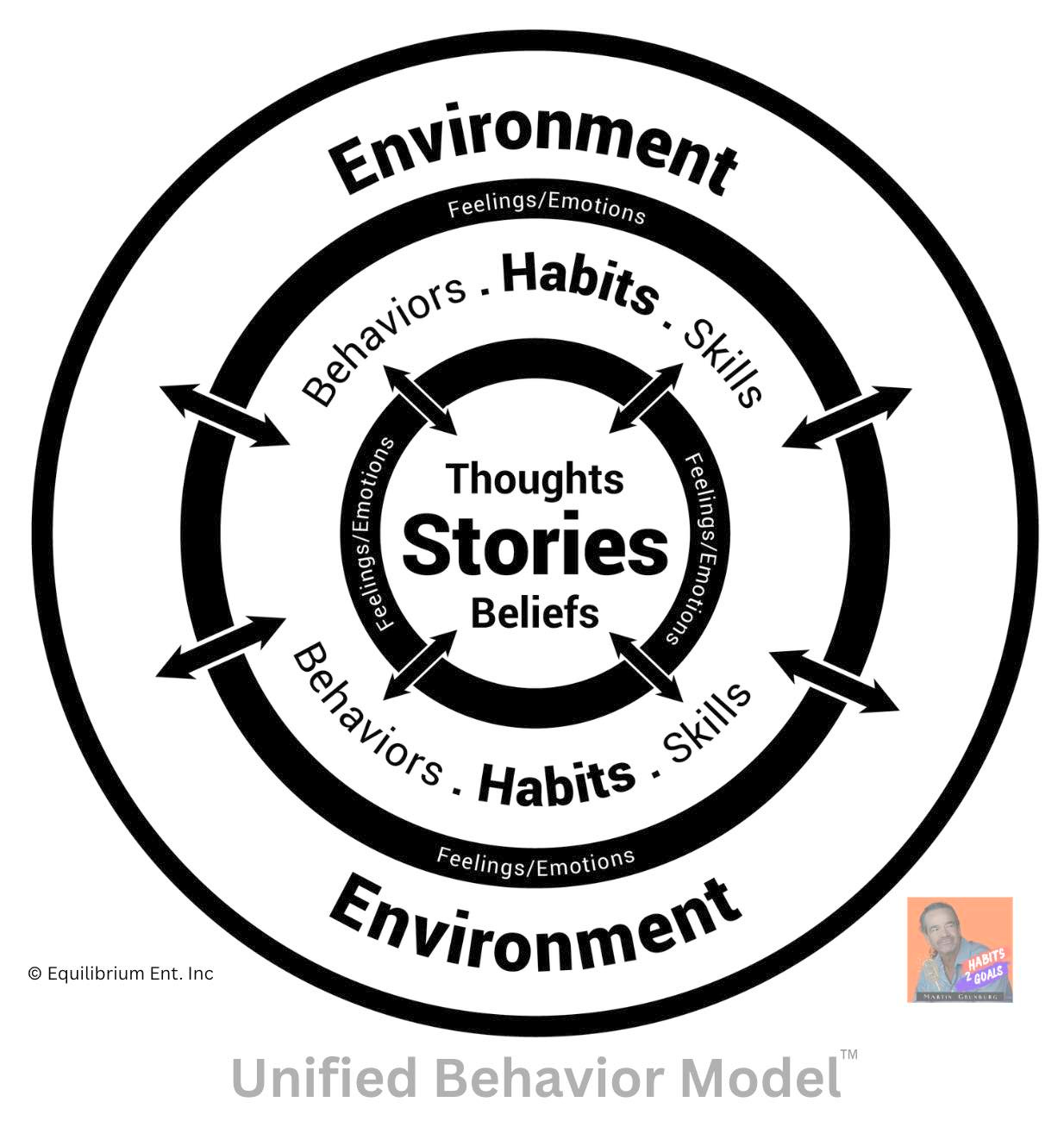
“Great theories have simple pictorial representation.”
—Michio Kaku
The Behavior Echo-System (BES): the systematic simplification of behavior.
Which makes it—by definition—the elemental science of behavior.
Allegedly.
Until—and unless—you produce the Black Swan.
It’s no coincidence that coherence is a synonym for unified.
BTW: A few hundred downloads Zenodo.org and ZERO entries to falsify it.
(Looking at you, top psych departments—according to U.S. News & World Report, 2025): @StanfordPsych, @HarvardPsych, @UCBPsychology, @UCLPALS, @Psych_at_Yale, @UMichPsych, @UCLA_Psych, @UCSDPsych, @OxfordPsych, @PrincetonPsych.
Please, with all due respect, step right up. 👊 🤙 🙏

🚨 BREAKING! Major breakthrough in habit tracking—skeptics, at long last, put to rest. Full details in Section 7.0 of the Unified Behavior Model™ white paper: https://zenodo.org/records/15844153